
The Pricing Illusion in Luxury Hospitality
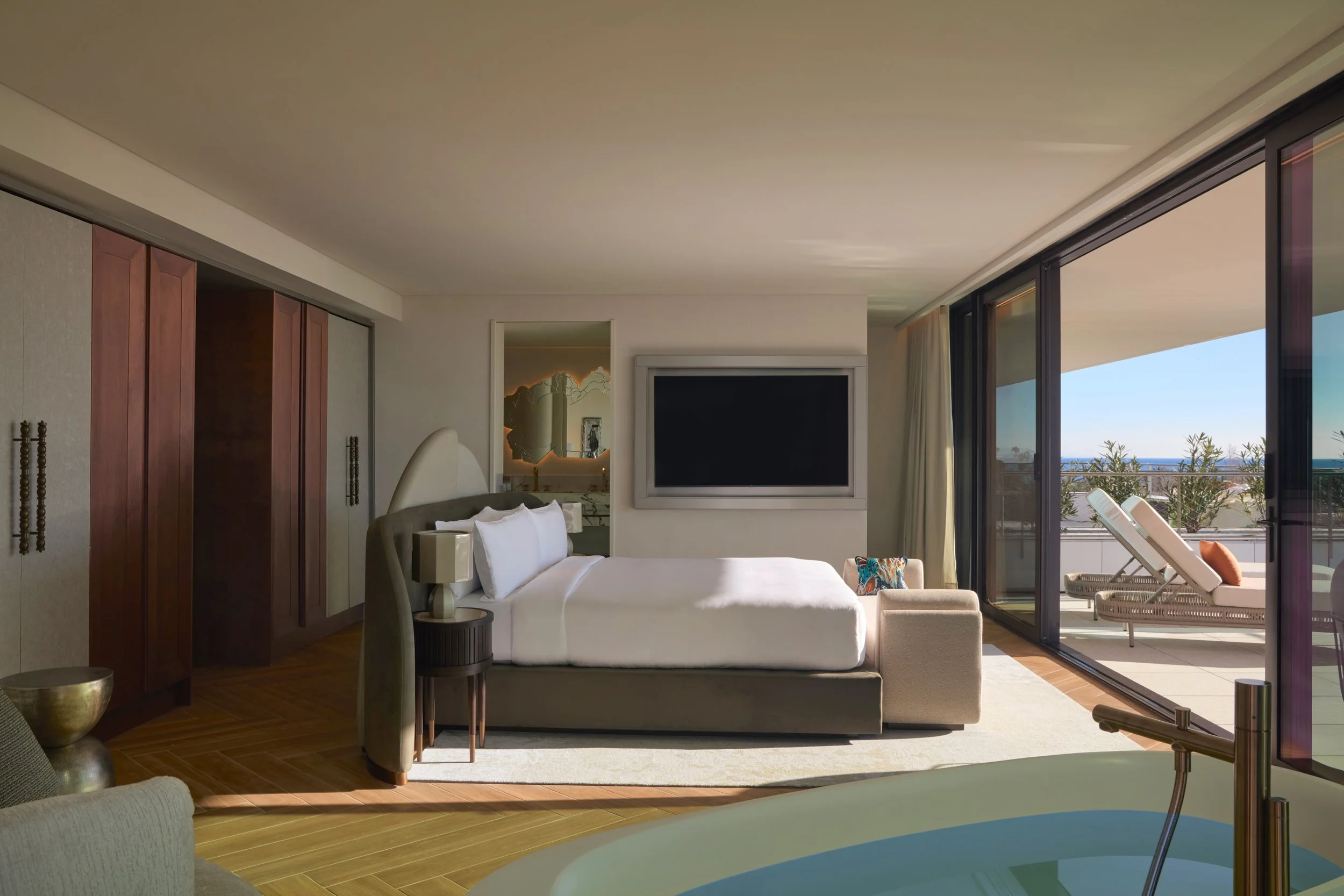
Luxuriate Suite at SLS Barcelona
Luxury is not losing pricing power.
But it is starting to show where it’s fragile.
I came across a recent BoF article on Dior and Chanel that puts this into perspective.
After years of aggressive price increases, they are not correcting by lowering prices. They are doing something more strategic: rebuilding their pricing architecture.
They are protecting the top.
But expanding what sits below it.
More entry-level products. More ways into the brand. More structured access.
Because growth is no longer coming only from price. It needs to come from volume again.
This is not just fashion.
Luxury hotels are in a similar place
If you look at current data (STR, CBRE, Amex GBT), the picture is still strong.
ADR is up.
Luxury is outperforming.
Key destinations continue to grow.
At surface level, everything looks healthy.
But underneath, the dynamics are shifting:
Occupancy is stabilizing
Growth is increasingly price-driven
Booking windows are tightening
Price sensitivity is returning, even in luxury
Alternative formats (villas, residential stays) are gaining traction
Suite demand remains strong, but concentrated at the very top
So no, luxury is not declining.
But access to luxury is becoming more selective.
The problem is not pricing. It’s structure.
Most luxury hotels today have a broken pricing pyramid.
Not in revenue terms.
In experience terms.
The gap between rooms and suites is often too abrupt.
Entry-level suites exist, but they are rarely positioned with intent. They are treated as:
a slightly bigger room
an upsell opportunity
a revenue line
Not as a product with a role.
What this means for hotels
The opportunity is not to adjust your top pricing.
It’s to redefine how guests enter your premium experience.
Entry-level suites should do three things
1. Act as a true entry into luxury
Not just more space, but a different experience.
More privacy, more comfort, more status.
2. Capture aspirational demand
Guests who are willing to stretch, but need a reason to do it.
Not price-driven. Value-driven.
3. Build future revenue
Today’s entry-suite guest is tomorrow’s top-suite guest.
If you give them a reason to come back.
This changes how we drive demand
Entry-level luxury does not behave like top-tier luxury.
It requires:
more time
more exposure
more storytelling
You don’t sell it only at the booking engine.
You build it earlier in the funnel.
And distribution matters more than we think
Consortia and luxury partners are often used only for top suites.
That’s a mistake.
They should also:
introduce guests into your premium layer
frame value without discounting
extend booking windows
Not all demand should be captured at the top.
Some of it needs to be built.
The risk nobody is talking about
If you only price for the highest-paying guest, you shrink your funnel.
And in the current environment, that becomes visible faster:
occupancy stops growing
booking windows shorten
demand becomes less predictable
The villa market is growing for a reason.
Not just because of space.
Because it offers a clearer sense of value and experience.
The real shift
Luxury is not moving away from high prices.
It is moving toward better structured access.
The takeaway
Protect the top.
But rebuild the path into it.
Because:
The strength of a luxury brand is not only defined by how high it can price.
But by how well it can bring people into it, and keep them there.
Sources referenced:
Business of Fashion — How Dior and Chanel Are Tackling Fashion’s Pricing Problem
STR Global Forecasts 2026
CBRE European Hotel Outlook 2026
Amex GBT Travel Forecast
Additional market data on luxury travel demand and segmentation
And yes, this was probably written faster than it should have been with the help of ChatGPT.
