
I worked at Apple from early 2012 until late 2013, helping to launch the Apple Store on Passeig de Gràcia as part of the retail marketing team. It was my first real job in marketing, and it shaped how I understood the discipline from then on.
I was lucky to join while Steve Jobs’ vision was still very present in the company. I took a lot of what I learned there to W Barcelona, and later into everything I have done since.
One memory has stayed with me more than most. The copy for a simple in-store event sign could take a month to be reviewed, rewritten and approved. A sign. At the time it felt slow. Looking back, it was the lesson: nothing was treated as a minor detail.
Since then, I pay attention when Apple makes a visible decision. There is usually serious thinking behind it, and it often says something that goes beyond technology.
People often say Apple is late. I see it differently. Apple waits until it is ready. It does not launch crap.
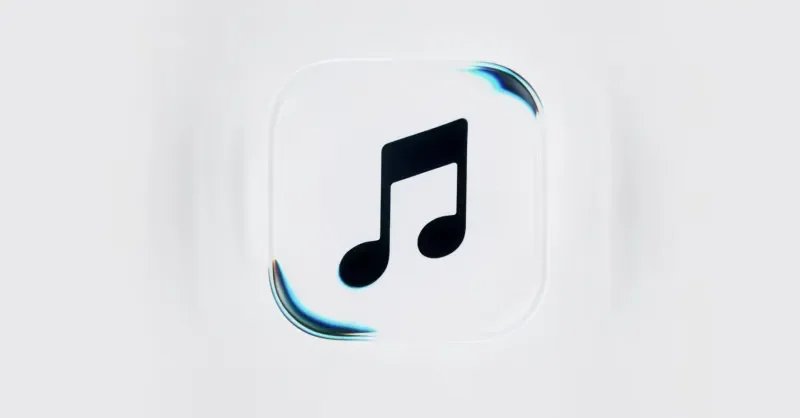
So when the new Apple Music identity came out, I had a look. I like the result. But it was the story of how they made it that stayed with me.
How It Was Made
There was no CGI or generative imagery behind the main visuals.
Fred again.. composed a short piece of music with NEST Acoustics, which also became the brand’s new sonic signature. They played it through a transducer into a shallow bath of mineral oil. The sound moved the liquid, cameras captured the ripples and the way light passed through them, and that footage became the raw material for the identity, including the music note symbol (Wallpaper*).
TBWA\Media Arts Lab developed the identity. Optical Arts built the installation and the software that translates the notes into movement. The team spent weeks testing different sounds, oils and machinery until they could control the result, and the final animation combines more than a hundred individually shot frames (It’s Nice That).
When I read that, I thought about that event sign. Weeks of testing oil and sound, for a few seconds of animation. Same company, same patience.
The rest of the identity is quite restrained. The wordmark uses Apple’s SF Pro in a wider cut than you would expect on a phone. The pink-red has mostly gone. It is now largely black and white, and the colour comes from the liquid and from the artists on the platform.
I like that choice. Apple Music sets the frame and lets the artists bring the personality.
And Then There Is A Room
A month before the new identity, Apple opened Apple Music Hall inside Battersea Power Station in London.
It holds 600 people, with a 38-foot stage, a 48-speaker spatial sound system, two recording and mixing studios and a broadcast control room. Artists can perform, record in Spatial Audio and produce broadcast content in the same space (Apple Newsroom).
A streaming platform, investing in a real room where artists and audiences meet.
I don’t think the timing is random. One project is made from sound, liquid and light. The other brings people together around live music. Both bring something you can feel into a business that mostly lives on a screen.
Apple TV Came First
Apple had already tried something similar.
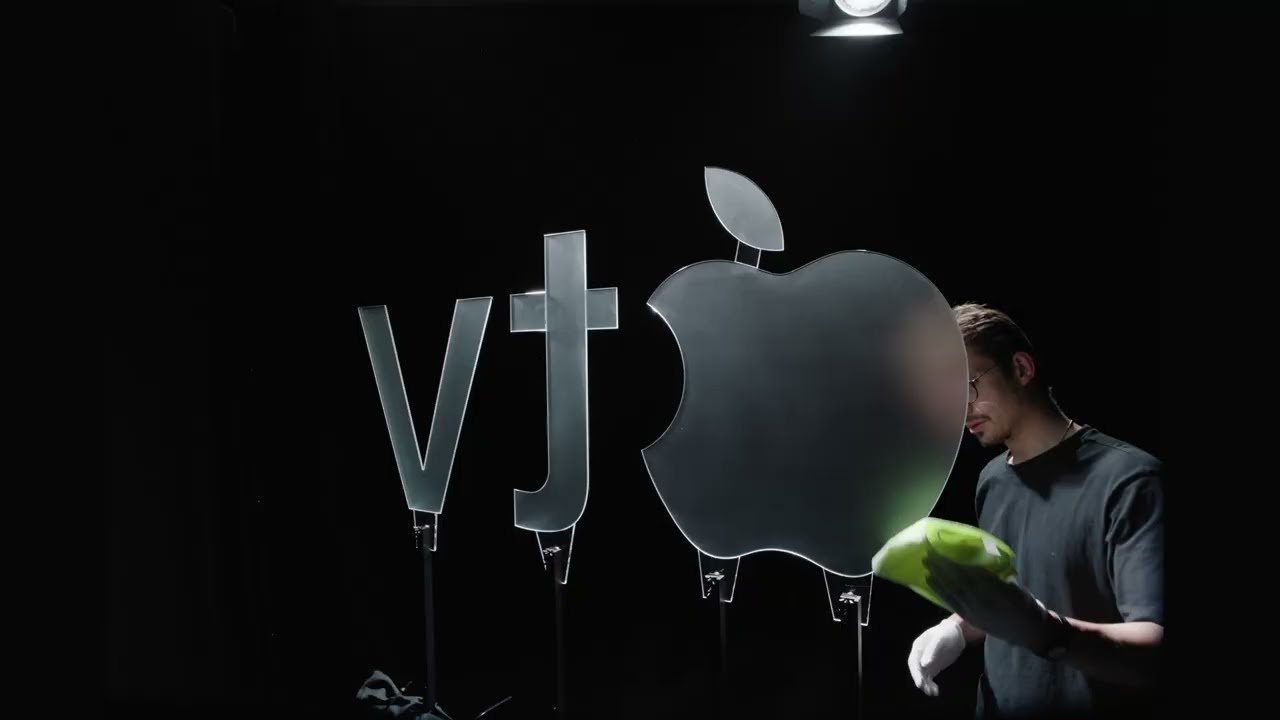
In November 2025, Apple TV introduced a new identity made from real glass and filmed entirely in camera, with a sonic logo by Finneas (9to5Mac). Same agency, same production studio (Fast Company).
I can’t know whether one led to the other. Knowing a little about how Apple works, I doubt the sequence is an accident.
What stays with me is the discipline. Apple TV used glass and light, the language of cinema. Apple Music used sound, because sound is the product. In both cases, the idea came from what the brand already is.
I Started Noticing It Elsewhere
Once you see it, you see it in other places.
Prada called its 2026 holiday campaign “Drawing Prada: Animated by Hand.” It combines Glen Luchford’s photography with illustrated worlds created by artists led by the animator John Pomeroy, and Prada presents it as a celebration of craft and process (Prada). They put the process in the title.
Etsy did it through policy. AI-generated patterns, recipes and instructions are no longer allowed, and sellers must include at least one unedited photo of the real item against a real background, with some exceptions by category. AI-generated art is still allowed when the seller has played a clear creative role and discloses it (Etsy Seller Handbook).
A technology company, a fashion house and a marketplace. Very different businesses, all showing a bit more of how things are made, and who makes them.
I don’t know yet whether this is a trend or a moment. But it feels like something worth watching.
AI Is Still Part Of It
I want to be fair here, because it would be easy to tell this as a story against AI. It isn’t quite that.
Optical Arts used AI-assisted coding tools to build the software that controls the installation. The technology helped them build the system. The images themselves came from sound moving liquid in front of a camera (It’s Nice That).
James Taylor, Global Head of Design at TBWA\Media Arts Lab, explained that as more of what we see feels automated or generated, people are looking “to feel things a little bit more” (Marketing Brew).
I understand that. The question I keep asking myself is where technology helps, and where people still create the value.
What This Means For Hotels
Hospitality should understand this better than most.
We have been talking about putting people first for decades. Marriott has it among its core values (Marriott International), and most hotel companies have their own version.
It has become a bit of a cliché. I still believe it. If anything, I think it is becoming more relevant.
Hotels are built around people. Guests remember the bartender who read the mood, the concierge who made something happen, the housekeeper who noticed a detail, the chef who came out to explain a dish. Those moments have always mattered.
What has changed is that everyone now has the tools to produce words, images and campaigns faster than ever. A lot of it will look competent. A lot of it will also look the same.
Hotels have something more interesting inside the building: people with experience, local knowledge, judgment and relationships. The work is understanding which of those stories belong to the hotel, and how they connect with its positioning and its guests.
The usual staff portraits and behind-the-scenes reels won’t be enough. We need to think harder about the story.
Five Things I Would Take Into A Hotel
1. Start with what the hotel is.
Apple Music used sound because sound is the business. For a hotel, the starting point is its positioning. A private resort, a city hotel, a historic palace and a wellness retreat have different stories to tell. If the hotel is about cultural access, show the relationships that open the city to guests. If it is about food, show the producers and the decisions behind the menu. If privacy matters most, show how the service is designed around discretion.
2. Know who the story is for.
A local guest, an international traveller, an owner and a future employee will notice different things. A local may care about the chef, the bar or the hotel’s place in the city. A traveller wants to feel the experience will be personal and worth the journey. A future employee wants to understand the culture. Decide who needs to hear it before choosing the format. Trying to speak to everyone usually weakens the story.
3. Show the parts of the process that add value.
A lot happens in a hotel that guests never see. The chef visiting producers. The concierge building relationships over years. Housekeeping knowing how a returning guest likes their room. The bar team testing a menu long before it reaches the table. Those stories show care and local knowledge. A generic video of someone smiling while arranging flowers adds more content to the world. I’m not sure it adds much more.
4. Use the spaces properly.
Apple built a venue for a digital platform. Hotels already have the spaces. Music, food, talks, collaborations and cultural events can make the positioning real and give people a reason to come back. The calendar doesn’t need to be full. It needs to make sense for the hotel, its guests and its place.
5. Use AI to give people more time.
AI helped Optical Arts build the software, and that allowed the physical idea to happen. Hotels can use it in the same spirit: less admin, better organised information, faster first drafts. The value is in what teams do with the time they get back. More attention to guests. Better decisions. Better conversations.
Add Value, Not Noise
I expect we will see many more brands talking about craft and showing people at work. Some will do it with care. Many will copy the format.
That doesn’t mean every hotel needs a campaign about its people.
Think about the hotel’s position, its guests and the story it can tell with real authority. Find the people and the processes that make that story credible. Then choose the format.
Hotels already have plenty of human stories. We just need to stop telling them all the same way.
And maybe, like that event sign back in 2012, take a bit more time over the details.
Yamil Errasti
Founder and Managing Director
