
Design Is an Operating System
How thoughtful design decisions shape F&B performance.
Guest contribution by DODA.A

In hospitality, restaurant design is often treated as an aesthetic exercise. Materials, lighting, furniture, atmosphere.
But inside successful venues, design behaves more like an operating system.
The layout of a dining room influences turnover. Acoustic comfort affects dwell time. Kitchen organization shapes staff productivity. Circulation paths determine service speed. Even material choices affect maintenance cycles and long-term brand perception.
In other words, design decisions directly influence how a restaurant performs.
After delivering nearly sixty restaurants for investors, chefs, independent restaurateurs, and hospitality groups, the architecture studio DODA.A has observed one consistent pattern: the venues that work best are those where concept, technical design, and execution are aligned from the beginning.
What follows are the design principles that repeatedly make the difference.
Start with the brief
Every successful restaurant begins with a coherent brief.
The concept defines far more than visual identity. It determines pricing, operational logic, service style, and guest expectations. When this thinking is clear, design becomes a translation exercise: space, materials, acoustics, lighting, and circulation reinforce the same story.
When the brief is weak, decisions fragment. Costs increase. The experience becomes diluted.
Design cannot compensate for conceptual ambiguity.
Align ambition with budget
Many F&B projects fail because ambition and financial reality are disconnected.
Design thinking requires financial clarity early. Investment decisions must balance impact and durability. Some areas demand resources: kitchen efficiency, lighting quality, acoustics. Others can be simplified without damaging the identity of the project.
A well-defined budget is not a constraint. It is a design parameter that protects both the concept and the long-term viability of the business.
Choose the right space
Design can improve a space, but it cannot completely rescue the wrong one.
Dimensions, structural limitations, ventilation possibilities, access for deliveries, and urban context all influence how efficiently a restaurant operates.
Before signing a lease, technical feasibility should be carefully evaluated. Extraction routes, fire regulations, accessibility, and seating potential must all be considered.
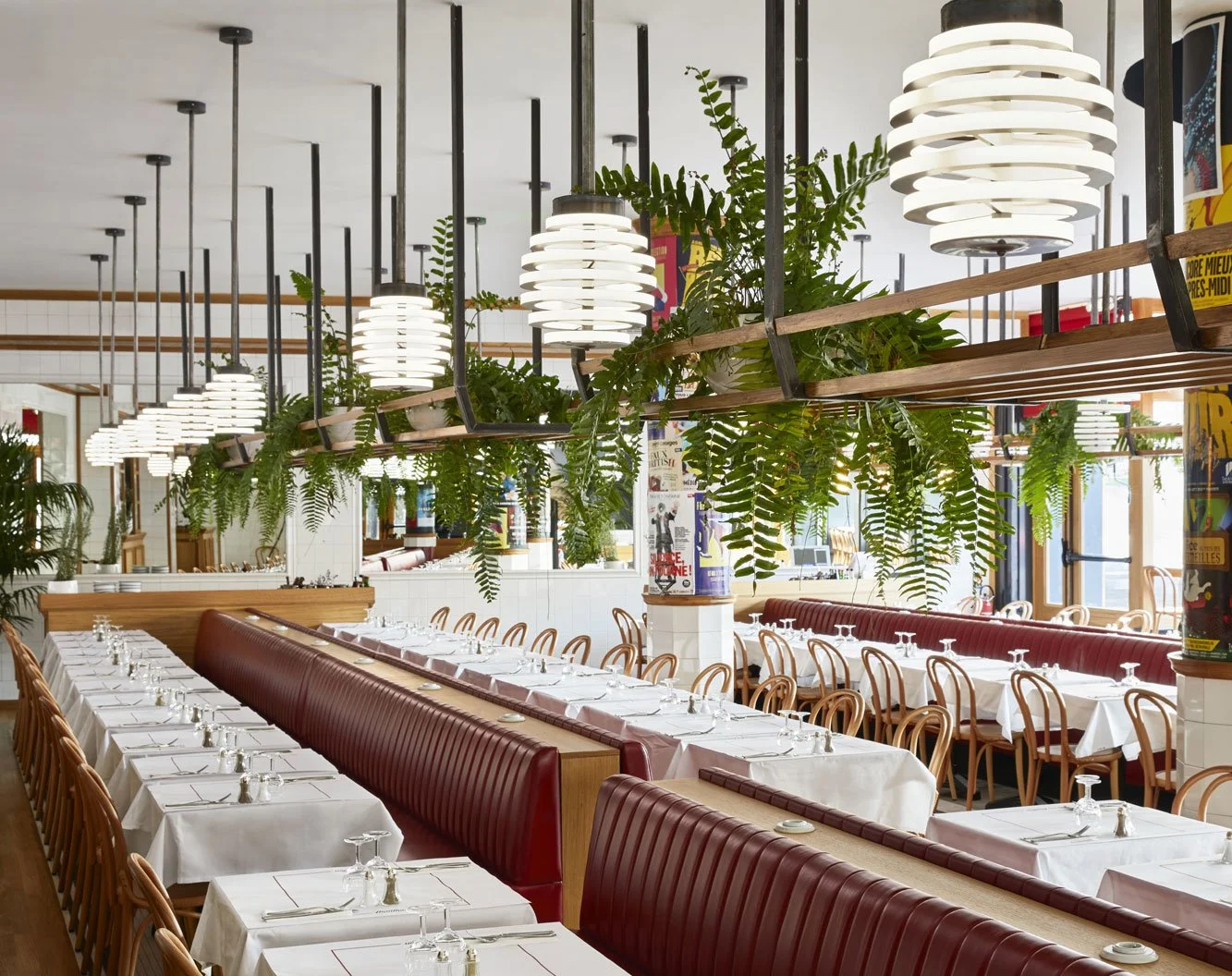
Many operational problems begin long before opening day; at the moment a space is chosen without technical analysis.
Design the timeline
F&B projects move quickly, but rushed decisions often create long-term operational problems.
A realistic timeline must integrate design phases, permits, technical studies, procurement, and construction. Planning also allows operators to test workflows and anticipate challenges before opening.
Time invested in design almost always saves time (and money) during execution.
Work with integrated expertise
Designing a restaurant is not simply interior decoration.
Architecture, kitchen design, engineering, regulatory compliance, and construction management must all operate within the same system.
Studios that oversee the entire process — from concept translation to technical planning and site supervision — reduce risk and ensure that design ideas remain compatible with operational reality.
Treat space as a financial asset
In hospitality, every square meter carries economic value.
The relationship between front-of-house and back-of-house areas influences revenue potential. Seating density affects turnover. Circulation determines service efficiency.
Optimizing space means understanding these ratios and designing accordingly.
Often, thoughtful planning improves profitability more than decorative interventions ever could.
Build with the right contractor
Execution is where many good projects fail.
An experienced contractor is essential to control schedule, costs, and technical coordination. Architects with F&B experience can also help identify the right building partners early in the process.
Strong collaboration between designers, contractors, and technical teams ensures that aesthetics, regulations, and operational needs align rather than collide during construction.
Adapt the concept to the space
Every building has its own constraints and opportunities.
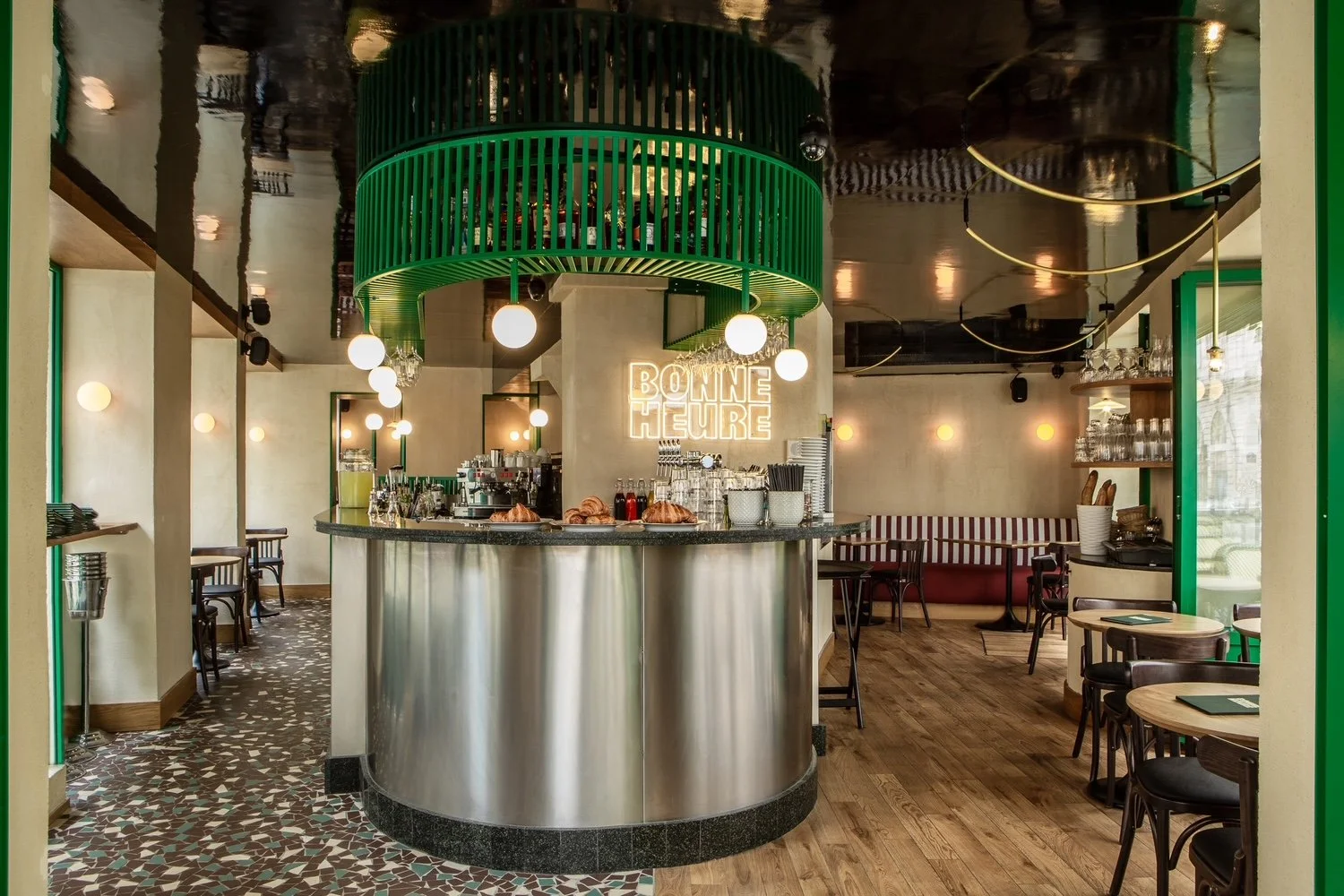
Copying a concept rarely works because architecture shapes how guests move through a space and how teams operate within it.
Successful projects respect brand identity while adapting the design to its context. This balance creates authenticity and strengthens the guest experience.
Design the invisible
Some of the most important design decisions remain invisible.
Circulation paths, service routes, kitchen organization, storage logic, ventilation, acoustics, and lighting infrastructure determine how smoothly a restaurant functions.
When these systems are thoughtfully designed, service becomes faster, teams work more efficiently, and operational stress decreases.
Guests may never notice these decisions directly, but they experience the results.
Design for longevity
Durability is often misunderstood as higher upfront cost.
In reality, durable materials and thoughtful construction reduce maintenance, age gracefully, and protect brand perception over time.
Designing for longevity also means considering energy efficiency, responsible sourcing, and layouts that can adapt as concepts evolve.
Restaurants that age well remain commercially viable longer.
Design Is a Business Tool
Restaurants are complex systems where guest experience, operations, and financial performance intersect.
Design sits at the center of that system.
When concept, space planning, technical infrastructure, and construction decisions work together, restaurants operate more smoothly. Teams move more efficiently. Guests stay longer. Costs remain under control. The concept remains relevant over time.
When these elements are disconnected, the opposite happens. Service slows down. Teams struggle. Maintenance costs rise. The original vision gradually erodes.
After nearly sixty projects, one lesson becomes clear: successful restaurants are not the result of decoration. They are the result of design decisions made with operational intelligence.
And that is where architecture stops being aesthetic — and becomes strategic.
About DODA.A
DODA.A is an architecture and interior design studio founded in 2009 by David-Olivier Descombes, bringing together architects, interior designers, and project managers working collaboratively from concept to completion.
Based in Paris and Normandy, the studio specializes in the renovation and transformation of buildings as well as the design of hospitality venues such as restaurants, hotels, and retail spaces. Their multidisciplinary approach combines architectural rigor with operational understanding, ensuring that each project aligns spatial design, technical systems, and user needs.
DODA.A’s work spans new construction, major renovations, and interior architecture, with a focus on creating spaces that are coherent, functional, and durable over time.
